
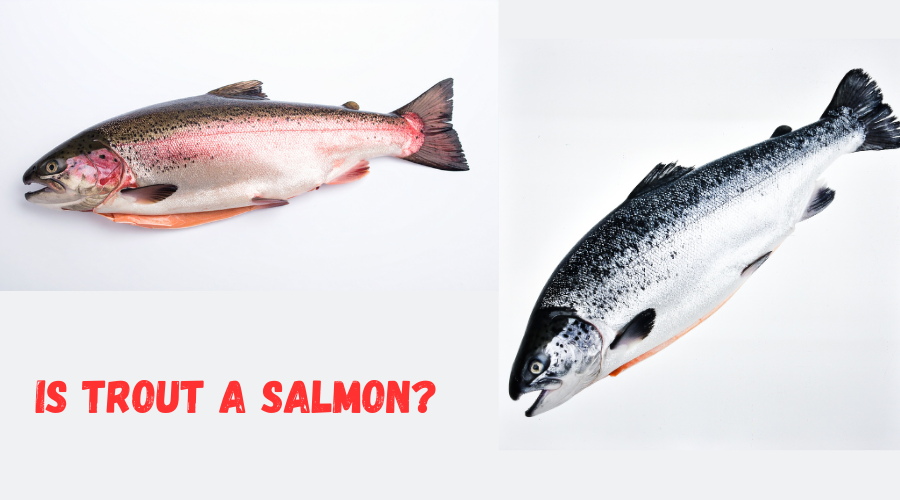
No, trout is not a salmon. They are different species, but both belong to the same fish family called Salmonidae. Trout and salmon are two of the most popular fish in the world, often found on restaurant menus, grocery stores, and health-conscious diets. Because they look similar and share many characteristics, people often wonder whether they are the same fish or completely different species.
The truth is, while trout and salmon are closely related, they are not the same fish. They belong to the same family but differ in habitat, taste, appearance, nutrition, and biological behavior.
In this detailed guide, we’ll break down everything you need to know about trout vs salmon, including their differences, similarities, taste comparison, health benefits, and species classification.
Trout is a freshwater fish that belongs to the salmonid family. It is commonly found in cold rivers, lakes, and streams.
Key characteristics of trout:
* Lives mostly in freshwater environments
* Has a lighter body color with spotted patterns
* Smaller in size compared to salmon
* Mild flavor with a slightly earthy taste
Some trout species, like rainbow trout, are farmed globally and widely consumed due to their affordability and nutritional value.
Salmon is also a member of the salmonid family but is known for its migratory behavior, meaning it moves between freshwater and saltwater.
Key characteristics of salmon:
* Lives in both freshwater and saltwater
* Has a richer, deeper pink or orange flesh
* Larger in size than trout
* Stronger, richer flavor
Salmon is highly valued for its omega-3 fatty acids and is considered one of the healthiest fish in the world.
Yes, trout and salmon are closely related. Both belong to the Salmonidae family, which also includes char and grayling species.
However, they are different genera:
Trout mostly belong to the Oncorhynchus and Salmo groups
Salmon belong primarily to Oncorhynchus and Salmo as well, but with distinct species behavior
This means they are cousins in the fish family, not the same species.
Although they share similarities, there are several important differences:
Feature Trout Salmon
Habitat Mostly freshwater Freshwater + saltwater
Size Smaller Larger
Color Lighter, spotted Deep pink or orange
Flavor Mild and delicate Rich and fatty
Fat content Lower Higher
Price Usually cheaper More expensive
These differences make each fish suitable for different cooking styles and dietary needs.
No, they do not taste the same.
Trout taste: Mild, slightly nutty, and delicate
Salmon taste: Rich, buttery, and more intense
Trout is often preferred by people who like a light fish flavor, while salmon is chosen by those who enjoy a stronger, oily taste.
Simply put:
Trout = subtle flavor
Salmon = bold flavor
Both fish are highly nutritious, but their nutritional profiles differ slightly.
Nutrient Trout Salmon
Protein High Very high
Omega-3 fatty acids Moderate Very high
Calories Lower Higher
Fat content Low to moderate High (healthy fats)
Vitamins B12, D B12, D, A, and more omega-3
Key takeaway:
Salmon is richer in healthy fats
Trout is leaner and lower in calories
Both are excellent choices for a balanced diet.
Both fish offer powerful health benefits:
The omega-3 fatty acids help reduce cholesterol and improve heart function.
2. Brain Function
Regular consumption supports brain health and cognitive performance.
3. Muscle Growth
High-quality protein helps build and repair muscles.
4. Weight Management
Trout, being lower in calories, is especially good for weight control.
5. Anti-Inflammatory Properties
Both fish help reduce inflammation in the body.
Both are healthy, but in different ways:
Salmon is healthier for omega-3 intake and heart health
Trout is healthier for low-calorie and lean protein diets
The “better” choice depends on your dietary goals.
Both trout and salmon belong to the Salmonidae family, but they are classified differently based on species and behavior.
Common Trout Types:
Rainbow trout
Brown trout
Brook trout
Common Salmon Types:
Atlantic salmon
Chinook salmon
Sockeye salmon
Coho salmon
These species differ in size, color, and migration patterns.
No, trout do not turn into salmon.
This is a common misconception. However, some species share similar life cycles and environments, which causes confusion.
Both are genetically distinct species that follow their own biological development.
Appearance Differences
Even though they look similar, there are noticeable differences:
Trout have smaller bodies and spotted skin
Salmon have larger bodies with smoother skin and stronger coloration
Trout fins are often more rounded
Salmon have a more streamlined shape for long migrations
Price and Availability
Trout: More affordable and widely available in freshwater farming
Salmon: More expensive due to demand, size, and nutritional value
This is why salmon is often considered a premium fish in global markets.
Trout and salmon are both versatile, but they behave differently when cooked:
Trout cooks faster due to lower fat content
Salmon stays moist and rich even with high-heat cooking
Trout is often grilled or pan-fried
Salmon is used for baking, grilling, sushi, and smoking
Choose based on your needs:
For light meals and low calories → Trout
For rich flavor and omega-3 boost → Salmon
For budget-friendly option → Trout
For premium nutrition → Salmon
Both are excellent additions to a healthy diet.
Trout and salmon are closely related fish that share many similarities but differ in important ways such as habitat, taste, size, and nutrition. While salmon offers a richer flavor and higher omega-3 content, trout provides a lighter, leaner alternative that is more affordable and mild in taste.
Understanding the differences between these two fish helps you make better dietary choices based on your health goals and flavor preferences. Whether you choose trout or salmon, both are nutritious, delicious, and valuable sources of high-quality protein and essential nutrients.
What is the difference between trout and salmon?
Trout is smaller, milder in taste, and mostly freshwater. Salmon is larger, richer in flavor, and migrates between freshwater and saltwater.
Is trout better than salmon?
It depends on your needs. Trout is lower in calories, while salmon is richer in omega-3 fatty acids.
How does trout taste compared to salmon?
Trout tastes lighter, softer, and less oily, while salmon has a richer, stronger, and fattier flavor.
Is trout cheaper than salmon?
Yes, trout is usually more affordable than salmon.